


“The only reason for time is so that everything doesn’t happen at once.” -Albert Einstein
Time has always been the great illusionist. It moves slowly when you’re paying attention, and all at once when you’re not. And nowhere is this truer than in moments of technological upheaval. Every industrial revolution has followed the same four-beat rhythm:
- A breakthrough technology emerges.
- Existing jobs disappear faster than new ones form.
- Entirely new industries rise from the ashes.
- The people who adapt early thrive.
We’ve lived through this cycle before; railroads, electricity, the automobile, the computer age, and the internet just to name a few.
But this industrial revolution is different in one critical way:
The adoption curve is faster than any transition in human history.
Railroads reshaped labor over 80 years. The internet took about 20. AI is taking 24–36 months.
That acceleration creates enormous opportunity, and enormous risk. If we want this transition to be humane, sustainable, and economically stabilizing, the preparation must happen before the displacement, not after. This is why HestiaAi exists.

What History Actually Teaches Us About Job Disruption
- The Railroad Revolution (1830s-1900s)
Before rail, there were no:
- locomotive engineers
- conductors
- telegraph operators
- station managers
- freight coordinators
- bridge designers
- timekeepers
- rail hospitality workers
These professions were invented by the railroad boom. But the transition wasn’t gentle. Handloom weavers and traditional transport workers saw their wages collapse to one-quarter of previous levels as mechanization advanced. [^1] Railroads even forced the invention of standardized time zones, giving birth to new scheduling and dispatch professions. [^2]
Old work shrank early. New work appeared later. The prepared crossed the gap.
- The Internet Revolution (1990s–2010s)
Before the mid-90s, there were no:
- software developers
- web designers
- cybersecurity analysts
- e-commerce managers
- SEO strategists
- app developers
- cloud architects
- remote collaboration specialists
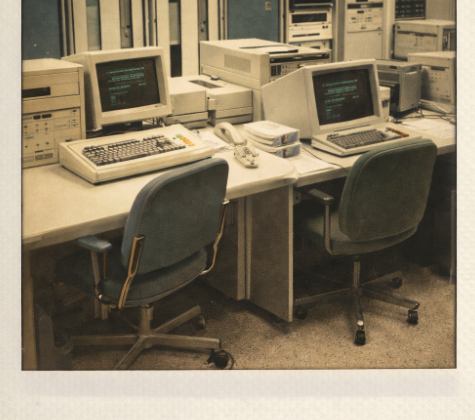
The entire digital economy. millions of jobs did not exist.
But displacement came first.
U.S. manufacturing employment fell from 19.6 million in 1979 to 12.8 million in 2019, a loss of 6.7 million jobs, driven heavily by automation and digitization. [^3]
The pattern repeated. Now the pattern is repeating again.

II. The AI Revolution: Faster, Sharper, and More Totalizing
Challenger, Gray & Christmas reported: 1,170,821 announced job cuts through November 2025. This is the highest year-to-date total since 2020, and only the sixth time since 1993 layoffs exceeded 1.1 million. [^4]
CBS News echoed: “Employers have cut more than 1.1 million jobs through November—the most since 2020.” [^5]
But raw numbers aren’t the full story. Unlike past revolutions:
- AI disrupts every industry simultaneously.
- It collapses tasks, not entire professions, leading to invisible churn.
- It restructures organizations faster than they can retrain.
- It gives early adopters exponential advantage.
This is where relativity becomes more than physics, it becomes leadership.

III. Relativity as a Leadership Lesson
Einstein’s theory of relativity tells us: Time is not absolute; its passage depends on the observer’s frame of reference. Two clocks moving at different speeds or sitting in different gravitational fields do not tick at the same rate. Thus, time literally flows differently depending on where you stand.
The same is now true in business. To leaders and teams actively preparing for AI: Time feels slow, manageable, full of possibility.
To those who avoid the conversation: Time collapses into crisis. Everything feels sudden. Everything feels too late.
AI isn’t accelerating. Your frame of reference is.
Companies that begin adapting now will feel time expanding; room to experiment, adjust, learn, and guide their people. While Companies that wait will experience time compressing, where restructuring feels instantaneous and inevitable.
In physics and in business: Readiness bends time, while Avoidance distorts it.
IV. What AI Will Destroy—and What It Will Create
AI will eliminate tasks, not people. But companies that fail to prepare will eliminate people long before AI eliminates their tasks. We’ve seen this pattern emerge already:
- Mismanaged AI rollouts lead to premature layoffs.
- Companies automate before understanding workflows.
- Leaders scramble to “catch up” with competitors who moved early.
- Workers lose jobs not because AI replaced them, but because their organizations failed them.
But AI will also create entirely new fields:
- AI workflow designers
- human–AI orchestration leads
- augmented sales strategists
- automation ethicists
- prompt librarians
- trust & alignment reviewers
- micro-automation engineers
- AI-assisted coaching roles
- digital empathy specialists
We just haven’t named them all yet; just like no one in 1890 could imagine a network engineer.
V. The Connector: Why the Systems Must Be Built Now
Every industrial revolution creates new work. But only the prepared are around to do it. AI’s transition will not be gentle or slow. The displacement phase is already underway. The creation phase will take time. If we want:
- economic stability,
- humane transitions,
- companies that survive,
- and workers who thrive…
…we must build the training, culture, systems, and guardrails now.
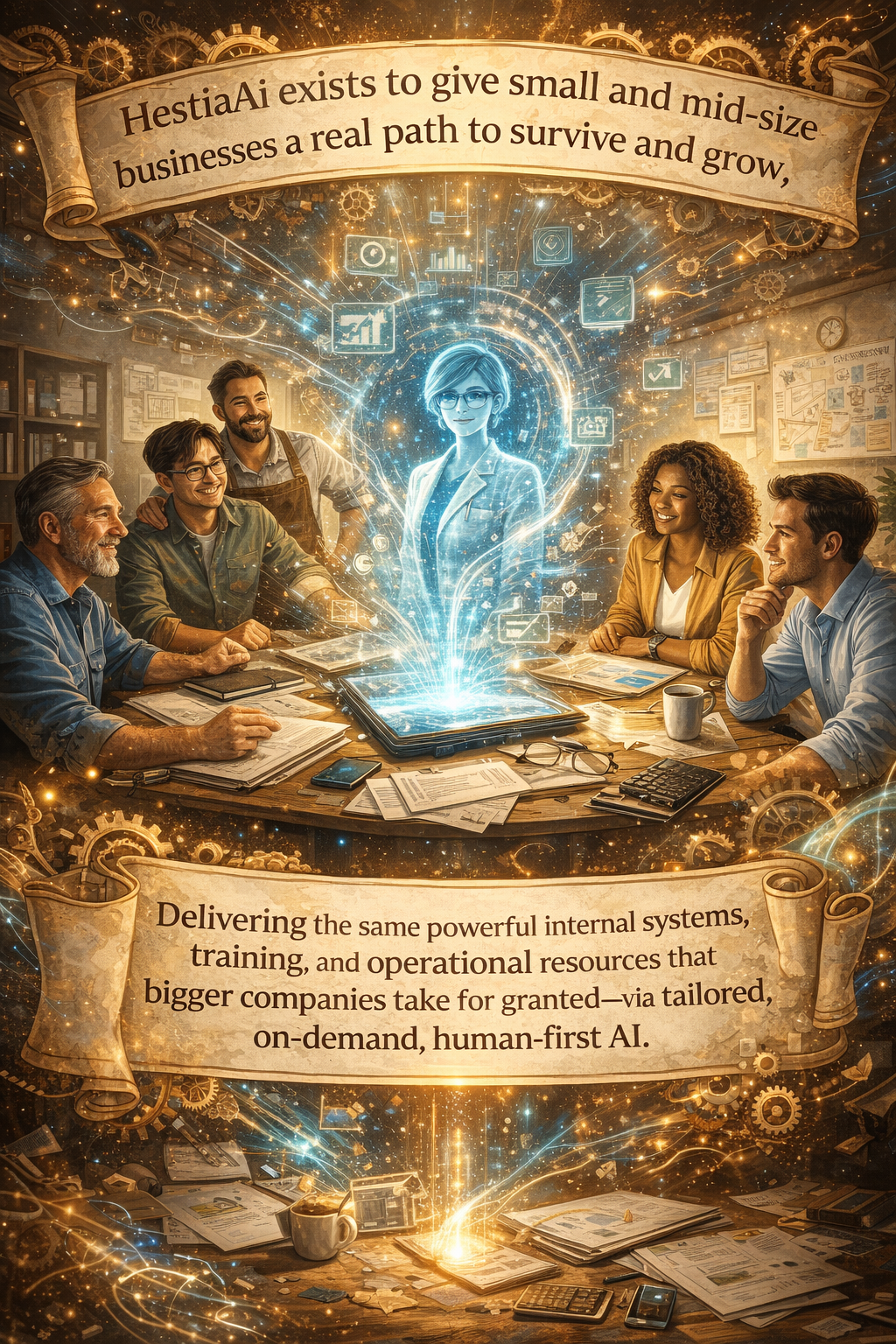
This is the heart of human-first AI: Prepare IT Resellers and MSPs before the technology arrives. Build the bridge before the river rises. HestiaAi is not automating humanity. It is equipping SMB for what’s coming. Because without the systems Corporate America has already built, they’ll find it insanely hard to compete with them.
And the time to prepare is now…before everything happens at once.

Footnotes / Sources
[^1]: Historical wage collapse among handloom weavers due to mechanized textile production (University of Leicester; textile labor studies).
[^2]: Railroads’ creation of standardized time zones and timekeeping professions (U.S. DOT archives; Stanford Railroad History Project).
[^3]: U.S. manufacturing decline from 1979–2019 driven by automation (Bureau of Labor Statistics).
[^4]: Challenger, Gray & Christmas, Job Cuts Report – November 2025: 1,170,821 announced job cuts.
[^5]: CBS News, MoneyWatch, reporting same Challenger data.
Add comment
Comments